
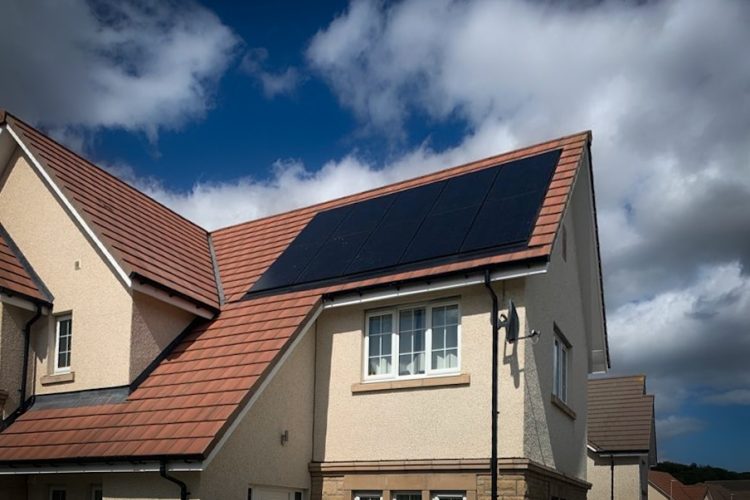
From 27 August, plug-in solar panels will become legal in the UK, making it easier than ever for homeowners to generate some of their own electricity.
The announcement has generated plenty of discussion, with some suggesting these systems could replace traditional rooftop solar installations, while others have questioned their safety and effectiveness.
The reality sits somewhere in the middle.
Plug-in solar panels have a place, but they're just one of several ways to generate and manage electricity more efficiently. Understanding what each option can (and can't) do is the key to making the right investment.
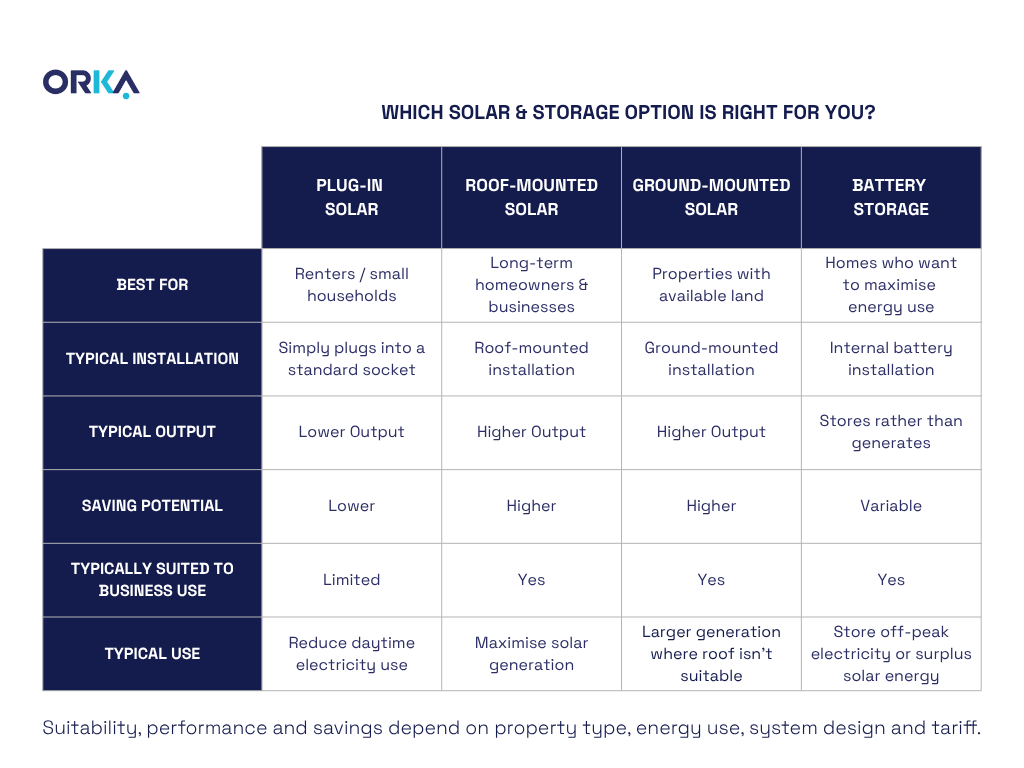
Every property is different, and so is the right energy solution. The comparison below provides a quick overview of where each option is generally best suited before exploring them in more detail.
What is a plug-in solar panel?
A plug-in solar panel is a small solar PV system designed to generate electricity during daylight hours and feed it directly into your home's electrical system through a standard socket.
Most plug-in solar systems are around 800W, making them considerably smaller than a professionally installed rooftop solar system. Rather than powering an entire property, they're designed to offset some daytime electricity use by supplying electricity to appliances that are already running.
Why is plug-in solar generating so much discussion?
For many households, traditional rooftop solar simply isn't practical.
Some people rent their home. Others live in flats or have a roof that isn't suitable for solar panels. Some simply aren't ready to invest in a larger solar installation.
Plug-in solar panels help remove some of those barriers by giving more people an opportunity to generate at least some of their own electricity.
While they won't be the right solution for everyone, they do open the door to people who previously had very few options for generating their own renewable energy.
Are they a replacement for rooftop solar?
No.
Plug-in solar panels and rooftop solar systems are designed for different purposes.
A plug-in system can help reduce some daytime electricity use.
A professionally designed rooftop solar installation can generate significantly more electricity and deliver much greater long-term savings.
It isn't about which technology is better. It's about choosing the solution that best suits your property, your energy use and your long-term goals.
Why professional advice still matters
Plug-in solar panels provide another option for households looking to reduce their electricity costs, but no two properties are the same.
Roof space, available land, energy use, future plans, available budget, and whether battery storage could add value all influence which solution is likely to deliver the best long-term outcome.
Understanding those factors before investing can help avoid spending money on technology that doesn't match your needs.
At ORKA Solutions, our role is to help customers understand the options available, so they can make informed decisions based on their own circumstances rather than simply following the latest trend.
Common questions
Are plug-in solar panels safe?
Like any electrical product, plug-in solar panels should always be used in accordance with the manufacturer's guidance and with suitable equipment.
Choosing quality products from reputable suppliers and using them as intended is important. As with any electrical installation, understanding the product's limitations is just as important as understanding its benefits.
Will they replace traditional solar?
Absolutely NOT.
Plug-in solar panels and professionally installed rooftop solar systems are designed for different purposes.
A plug-in system can help reduce some daytime electricity use, while a professionally designed rooftop solar installation can generate significantly more electricity and deliver much greater long-term savings.
They're different solutions for different requirements.
Can I just keep adding more panels?
Not necessarily.
Every system has operating limits and should always be used within the manufacturer's specifications.
Are they suitable for everyone?
No.
The right solution depends on your property, your electricity use, your budget and what you're hoping to achieve.
Those factors are far more important than simply following the latest trend.
Are plug-in solar panels worth it?
If your aim is simply to reduce a little of your daytime electricity use, a plug-in solar panel could be worth considering.
If you're looking to make a significant reduction in your electricity bills or maximise long-term savings, a professionally designed rooftop solar system is likely to be the better option
What solution is right for you?
There isn't a single answer that suits every property.
Some households may benefit from the simplicity and flexibility of a plug-in solar panel, while others will achieve much greater long-term value from a professionally designed rooftop or ground-mounted solar installation.
For some properties, battery storage may also be worth considering, either alongside solar or as a way of making better use of off-peak electricity tariffs.
The right choice depends on your property, how and when you use electricity, your available budget and your long-term plans.
Understanding those factors before investing will usually lead to a better outcome than choosing technology simply because it's new.
Summary
Plug-in solar panels are a welcome addition to the market because they give more people the opportunity to generate some of their own electricity. They won't replace professionally designed solar installations, nor are they intended to. Instead, they add another option to a growing range of energy technologies that can help reduce costs and improve energy resilience.
At ORKA Solutions, we believe the best energy decisions start with understanding those options. Whether that's plug-in solar, rooftop solar, ground-mounted solar or battery storage, the right choice depends on your property, your energy use and what you're hoping to achieve.
Further Frequently Asked Questions
When do plug-in solar panels become legal in the UK?
From 27 August, plug-in solar panels can legally be connected following the changes to UK regulations. The change gives more households the opportunity to generate some of their own electricity using smaller plug-in solar systems, provided they are used in accordance with the applicable requirements and the manufacturer's guidance.
Can plug-in solar power my whole house?
No. Plug-in solar panels are designed to offset some daytime electricity use rather than power an entire property. Most systems are much smaller than a professionally installed rooftop solar system and are intended to support everyday electricity use rather than replace your mains supply.
Can renters use plug-in solar panels?
Potentially, yes. One of the biggest advantages of plug-in solar is that it could provide an option for people who rent their home or live in properties where a traditional rooftop solar installation isn't practical. However, it's always worth checking with your landlord or property manager before installing any equipment.
Do plug-in solar panels work in Scotland?
Yes. Like all solar PV systems, plug-in solar panels generate electricity from daylight, not just direct sunshine. While electricity generation will naturally vary throughout the year, they can still produce useful amounts of electricity in Scotland when positioned appropriately.
How do I know which solar solution is right for my property?
There isn't a single answer that suits every property. The right solution depends on factors such as your available roof space or land, your electricity use, your budget and your long-term plans. Whether that's plug-in solar, rooftop solar, ground-mounted solar or battery storage, understanding those factors before investing will help you choose the option that's best suited to your needs.
Need advice on the right solar solution?
Whether you're considering plug-in solar, rooftop solar, ground-mounted solar or battery storage, choosing the right solution starts with understanding your property, your energy use and your long-term goals.
If you'd like to discuss the options available, contact ORKA Solutions for friendly, straightforward advice tailored to your property and requirements.