
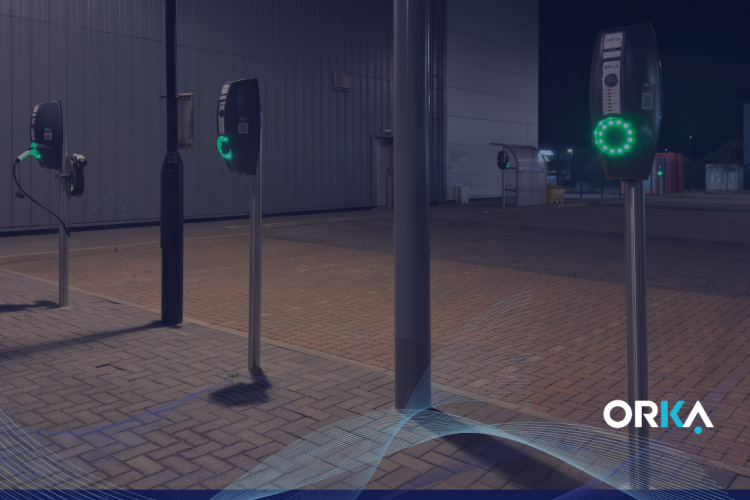
New HMRC rules confirm how VAT applies to workplace and public EV charging, highlighting why businesses need to understand how their chargers are used and managed.
Businesses operating electric vehicle (EV) chargers may want to review how they manage charging following an update from HM Revenue & Customs (HMRC) on VAT and Climate Change Levy.
Revenue and Customs Brief 13 (2026), published on 28 October, confirms that electricity supplied through public EV chargers and workplace chargers available to employees or contractors does not qualify for the VAT relief available to domestic electricity.
The legislation came into effect on 1 November 2026.
What has changed?
Electricity supplied through public and workplace EV chargers covered by the new legislation is subject to the standard 20% VAT rate, rather than the relief available for qualifying domestic electricity.
The update also confirms that these charging supplies do not qualify for the domestic-use exemption from Climate Change Levy, a tax on business energy use.
Importantly, this is not a new blanket tax on EV charging. HMRC has reinforced its existing position on public charging and made the rules clearer for workplace charging.
For businesses, it's a useful opportunity to check how their charging facilities are used, monitored and managed.
What should businesses consider?
Not every business uses EV chargers in the same way.
Some provide free charging for employees or visitors. Others charge users, operate dedicated fleet chargers or make their facilities available to paying customers and the public.
Whatever the arrangement, it's worth considering a few practical questions:
- Who can use the chargers? Are they for employees, fleet vehicles, customers or the public?
- Can you see how much electricity is being used? Is charging activity recorded and easy to monitor?
- How are payments handled? If users pay to charge, are tariffs and transactions easy to manage?
- Can you access useful reports? Do you have the information needed to track usage and costs?
How the VAT and Climate Change Levy rules apply will depend on how the charging service is provided. Businesses should speak to their accountant or tax adviser if they're unsure.
Why charging management matters
Installing EV chargers is only part of the picture. Businesses also need to think about how they'll be used and managed over time.
Charging management software can make this easier, giving businesses more control over access, pricing, payments and electricity usage.
Westhill-based ORKA Solutions provides commercial EV charging installations alongside ongoing support through the Fuuse charging management platform.
Customers can add or remove users, control who can access their chargers, change charging prices and manage payments through a subscription-based service. Usage reports also help businesses keep track of charging activity and costs.
While charging software doesn't replace professional tax advice or automatically ensure VAT compliance, having clear records and visibility of charging activity can make day-to-day administration easier.
Planning beyond installation
Duncan Booth, Managing Director of ORKA Solutions, said:
“Installing EV chargers is one thing. Making sure they're easy to use, monitor and manage is just as important. Businesses need to think about that from the outset, not once the chargers are already in place.”
For organisations considering new workplace, fleet charging infrastructure or publicly accessible charge points, thinking about how chargers will be managed before installation can help avoid unnecessary complications later.
Businesses with existing chargers may also benefit from reviewing how they operate and whether they have the information and control they need as demand grows.
Further information: HMRC Revenue and Customs Brief 13 (2026).